

 There are distinct differences between prosecution for a criminal offense and the pursuit of a legal remedy through a civil proceeding:
- Burden of proof—In a criminal prosecution, the jury must have no reasonable doubt as to your guilt. In a civil proceeding, they only need to conclude that your version of the facts is more believable than your opponent’s story.
- The sanctions/penalties—In a criminal proceeding, you can face incarceration, fines (payable to the state), restitution (payable to the victim), community service, probation and even, in some jurisdictions, the death penalty. In a civil lawsuit, the remedy is customarily a monetary damage award, though there are limited situations where a court may compel a party to do something.
- The source of the law—As a general rule, crimes are established by statute, a written law enacted by a legislative body. Though some civil wrongs are also statutory, most are derived from the common law, written down in opinions of judges in prior cases.
- The parties—In a criminal prosecution, one of the parties is always the government, acting on behalf of the people. In a civil matter, the parties are usually private citizens or companies, though the government may be a party to a civil lawsuit.
Proven Maryland Criminal Defense Lawyer
Attorney Jonathan Scott Smith has protected the rights of criminal defendants in Maryland for more than 30 years, including people charged with misdemeanors or felonies. SuperLawyers has named him one of the top 100 lawyers in Maryland and The American Lawyer Magazine has also cited him as a Top-Rated Lawyer.
Attorney Smith has been AV-rated (the highest possible) by his colleagues in the legal profession under Martindale-Hubbell’s Peer Review Rating System for more than three decades. He has also received Martindale-Hubbell’s prized Client Distinction Award, an accolade earned by less than 4% of all attorneys nationwide. He carries a 10.0 (Superb rating) as a trial lawyer from AVVO and has also earned AVVO’s Client’s Choice Award, with an average client review of 5 stars.
A highly-regarded trial attorney, Jonathan has an extensive knowledge and understanding of Maryland criminal law and procedure. He knows how to effectively gather and preserve evidence and will take all necessary measures to ensure that law enforcement officers did not violate your constitutional rights.
Contact a Proven Maryland Violent Crimes Defense Lawyer
At the law offices of Jonathan Scott Smith, we aggressively advocate for criminal defendants throughout the greater Baltimore area and across the state of Maryland. Contact us online or call 410-740-0101 to arrange a meeting. We handle cases throughout Anne Arundel County, Carroll County, Frederick County, Howard County, Baltimore County, Prince George’s County and Montgomery County in Maryland.

 2022 is on track to be the deadliest in Baltimore’s history, with nearly 180 homicides in the first six months. The city recorded 42 slayings in May, 2022, the first time that the monthly toll exceeded 40 since May, 2015, when police logged a record 45 killings. The city’s Carrollton Ridge neighborhood, which experienced just six
  A 38-year-old Baltimore man died in 2021 from gunshot wounds originally sustained in 1999, when he was just 16. Police say the bullet severed the victim’s spinal cord, leaving him paralyzed. After his death, a medical enquiry determined that the man had never returned to good health after the shooting and ruled the death a homicide.
 The penalties for conviction of
  Like all other states, Maryland takes a serious approach to drinking and driving. Under state law in Maryland, a person may face either a DUI (driving under the influence) charge or a DWI (driving while intoxicated) charge if convicted of drunk driving.
 Prosecutors and legislators in Maryland take a serious approach to domestic violence and abuse. If you are convicted of
  Imagine yourself in a situation where someone has done something to cause you to lose your temper. You say something or you engage in a reflex gesture, maybe clenching your fists, and the next thing you know, the police are at your door, seeking to arrest you on charges of assault. It can happen.
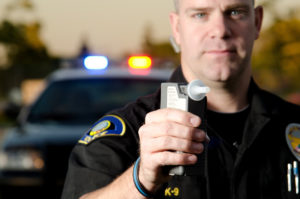 In Maryland, as in other states, when you have been pulled over by a police officer, you may be asked to submit to either a field sobriety test (to establish probable cause) or a blood alcohol test, to determine whether you are in violation of the law. Can you refuse to take either one of these tests? If so, are there consequences?